artlooklearn.com

menu icon
go to homepage
  • All Lessons
  • About
  • Contact
    • Facebook
    • Instagram
    • Pinterest
    • YouTube
  • search icon
    Homepage link
    • All Lessons
    • About
    • Contact
    • Facebook
    • Instagram
    • Pinterest
    • YouTube
  • ×
    Home » Simple Watercolor painting for beginners » How to Paint a Pine Tree Easy in Watercolor

    How to Paint a Pine Tree Easy in Watercolor

    Learn how to paint a pine tree easy in watercolor with this art lesson. Discover the simplest technique to paint a beautiful evergreen tree quickly. 

    Practice painting pine trees and find out tips and tricks to making watercolor painting easy and fun! This step-by-step tutorial will lead you through everything you need to know.
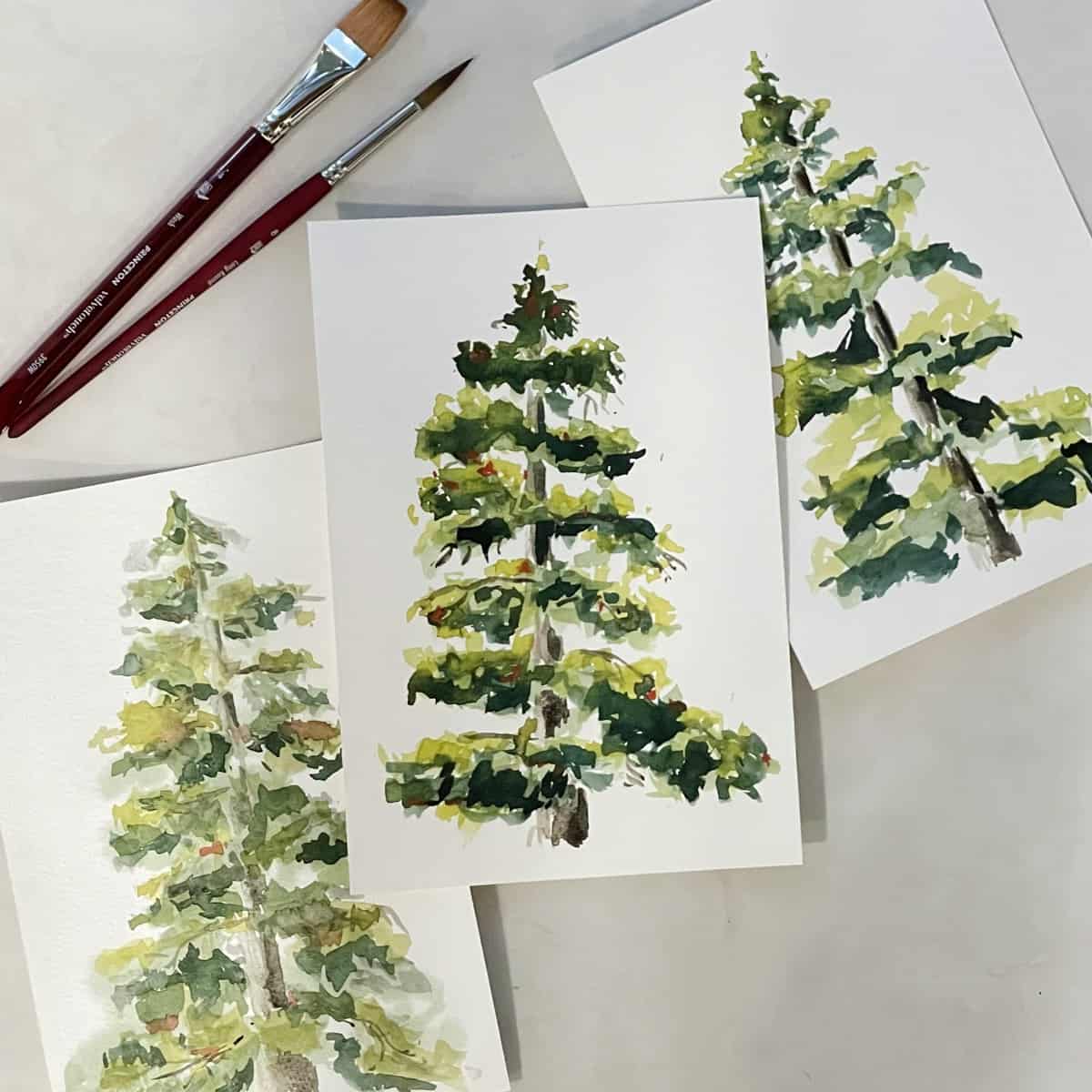
    Three watercolor paintings of pine trees next to some paintbrushes.
    Jump to:
    • Materials
    • Paint a Pine Tree Video Tutorial
    • Transcript
    • How to Paint a Pine Tree Art Lesson
    • Variations
    • Tips and tricks
    • Painting a Pine Tree Instruction Card
    • Frequently Asked Questions
    • You also might like

    In this quick online video art class, practice how to paint a pine tree. You will learn the basic skill of layering multiple colors to make your tree look more realistic without painting every single branch.

    Painting pine trees is a great way to practice brushstroke techniques for beginners and more experienced artists. Seeing and painting values and hues in nature or within a still life will help you become a better artist.

    Whether you want to paint a Monterey pine, a cedar tree, or a fir tree (which are not actually pine trees), these techniques are adaptable to painting any kind of evergreen tree.

    Materials

    • Watercolor paper - I am using Strathmore 400 Series, cold press, watercolor paper, 140 lb., cut down to 9 by 6 inches
    • Watercolor paint - tube watercolor paint on a pallet or a box kit of watercolor paints. You can use whatever colors that you have on hand. For this lesson I use: Cadmium Yellow,
    • Prussian Blue, Black, Burnt Umber, and Cadmium Red Light
    • Paint brushes - I am using a #8 round brush.
    • Water 
    • Paper towels

    Paint a Pine Tree Video Tutorial

    Transcript

    Read Transcript
    Hi everyone. In this art lesson we are going to paint a quick and easy pine tree. Let's jump right in. I mixed together a little bit of cadmium yellow, Prussian blue and a little bit of black to make this nice middle green color.

    Start by painting in the basic structure of the tree.

    Keep your strokes nice and loose and I like to look at a photo of a tree or you could even look at a tree in real life but kind of look for the overall lights and darks to get the basic structure of the tree going on here. 

    Remember that in nature trees are going to be a little bit irregular usually. There might be more branches sticking out in one area than another, or a little bit lopsided, or not completely symmetrical the way you might imagine a tree is. I'm also thinking about the way that the branches swoop out and down and this is a fur tree so they do kind of swoop out and down other trees might have a different kind of branch structure than this. 

    All right, I rinsed out my brush now I'm going in and adding in the trunk. I'm using a little bit of burnt umber mixed with black. I'm going to paint the right side of the trunk. So I'm imagining that the light is hitting the left side of the trunk, so I'm concentrating the color on the right hand side then I will go back in and draw the color across to the left hand side. 

    Rinse out my brush and just using this damp brush I'm going to pull the color across. Use the color that's already on the paper and pull out.

    So you can already start to see that highlight showing up on the left. Oops, a little bit too much paint right there so I just lifted it off with my brush.

    All right, there we go. Now I'm going to add in some, this is cadmium yellow mixed with a little bit of Prussian blue to make a nice light green. So I'm going to go in and add this in to the tops of the branches, mostly on the tops of the branches. 

    I am slowly building up, little by little building up the layers and color. Notice where I overlap the light yellow onto the, I mean the light green onto the medium green I'm getting uh even more texture and different colors added to the painting. This is actually called glazing, now you can impress all your friends with your art lingo, that you are glazing when you're adding these thin layers thin washes of color. 

    Still keeping my strokes nice and loose.

    That's a good start. Now I'm going to go in with this dark, dark green it's a mix of Prussian and blue a little bit of the cadmium yellow, and then some black for a nice dark green. I'm concentrating this mostly on the bottom parts of the branches but again referring back to my photo to see where those areas of lights and darks are. 

    I know I am painting kind of quickly here, I'm, I have not sped up the video. This is all in real time that I'm painting. But do go at your own speed you can pause the video, and start and restart so you are able to go at your own speed. 

    There, starting to build up this nice contrast with the darks in the painting. 

    This is a really good painting just to practice. Practice making strokes, practice layering up that color, practice the techniques.

    All right, so you can see my tree is really starting to come together right now it's actually looking like a tree.

    Rinsing out my brush and I got a little bit of black on the tip of my brush and just adding a a little bit of shadow onto the right side of the trunk. This will up the contrast and just make the painting a little bit more interesting. 

    When I sit back and take a look at my paintings I usually like the ones that have a little bit more contrast, that is a bigger difference between the lights and darks, so lots of dark darks and lots of light lights and a few all of the colors in between.

    I'm adding a few little branches here and there using my black and burnt umber mix. I'm not painting every single branch obviously, but just a few here and there. Kind of adding a little bit more detail to this painting

    It's kind of like when you look up into the canopy of a forest and you might see a few little branches but you're not going to see every single branch.

    And a few little trigs sticking out here and there. 

    I could leave my tree just like this if I like it. It looks very tree-like and I like it however, I'm going to go back in and add a few more layers of these colors just to add a little bit more texture and color. So I'm starting with the green, the light green mix. 

    And building up a little bit more of these highlights, mostly on the tops of the branches. But again I can refer back to my photo and see where these lights and darks really are.

    And now some more of this middle green.

    And now some more of this dark green. 

    Now I'm concentrating kind of on bigger shadowy areas.

    Mostly on the undersides of the branches, again where they would be in more shadow.

    Of course, avoid making patterns keep, keep your strokes nice and loose and irregular. 

    All right, I'm going to rinse out my brush and add in just a few little dabs of red here and there. This just adds a nice little pop of color and when you look at things in nature and squint your eyes you can actually see all the different colors coming together to make up that object. It's never just like, a tree is never just a solid green, it's composed of all the different colors that we see in nature. So actually here you could even add in a few dabs of purple, browns, or blues or other colors that you see.

    Thanks for watching. I hope you enjoyed this art lesson. Please like and subscribe and look for more great art lessons at artlooklearn.com.

    How to Paint a Pine Tree Art Lesson

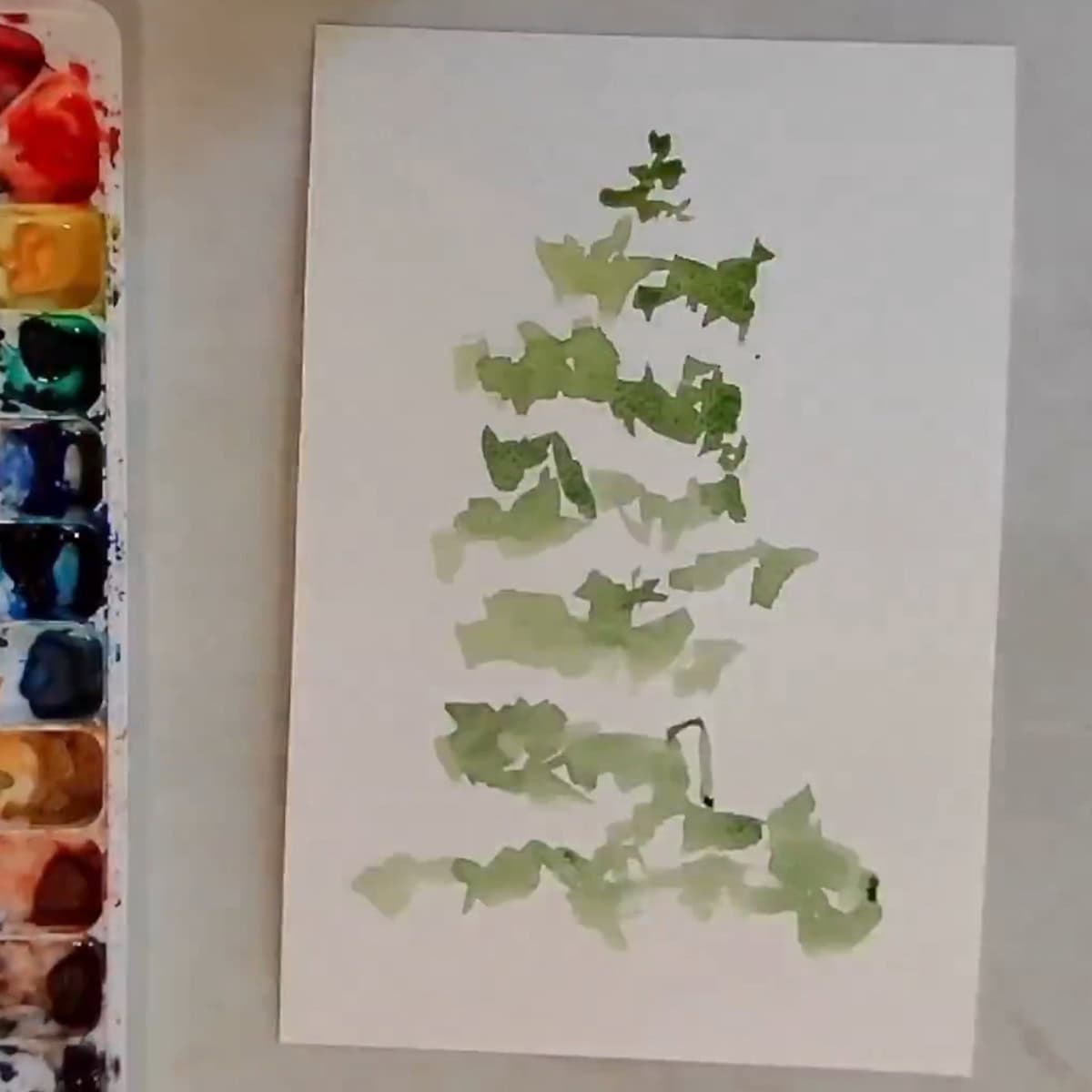
    Beginning painting of a watercolor pine tree next to a paint palette.
    Paint the basic tree structure
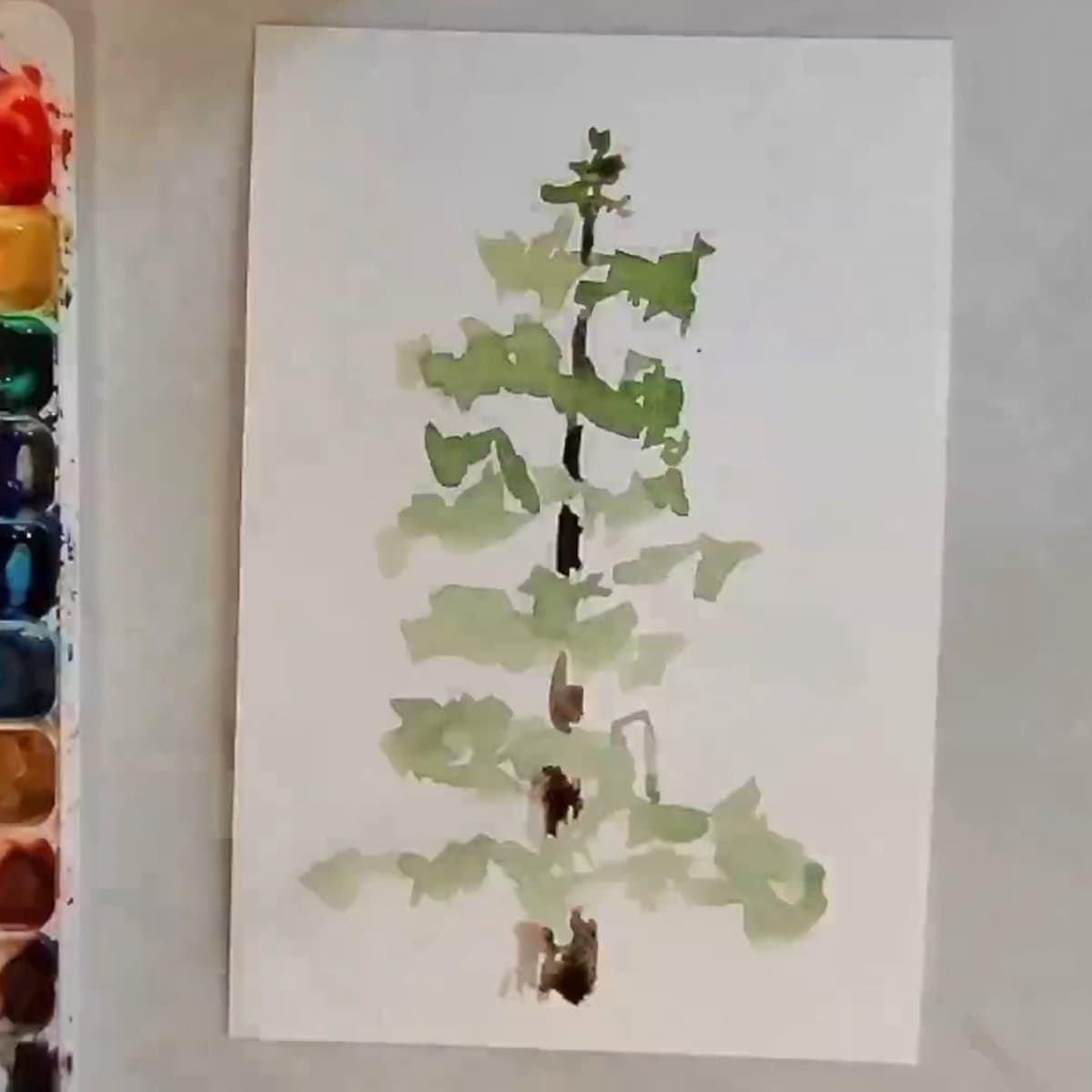
    Beginning painting of a watercolor pine tree next to a paint palette.
    Add the trunk, drag paint left for highlight
    • Keep the paint strokes loose and irregular when practicing painting this tree.
    • Mix cadmium yellow, Prussian blue, and a little bit of black paint. Paint the basic structure of the pine tree. Paint with me, look at a real tree, or a photo of a tree to get a sense of where the lights and darks are.
    • Use black and burnt umber to create the trunk. Paint the right side of the trunk in between the branch clusters. Rinse out the brush and then drag the paint from the right across to the left side of the trunk to create a highlighted effect.
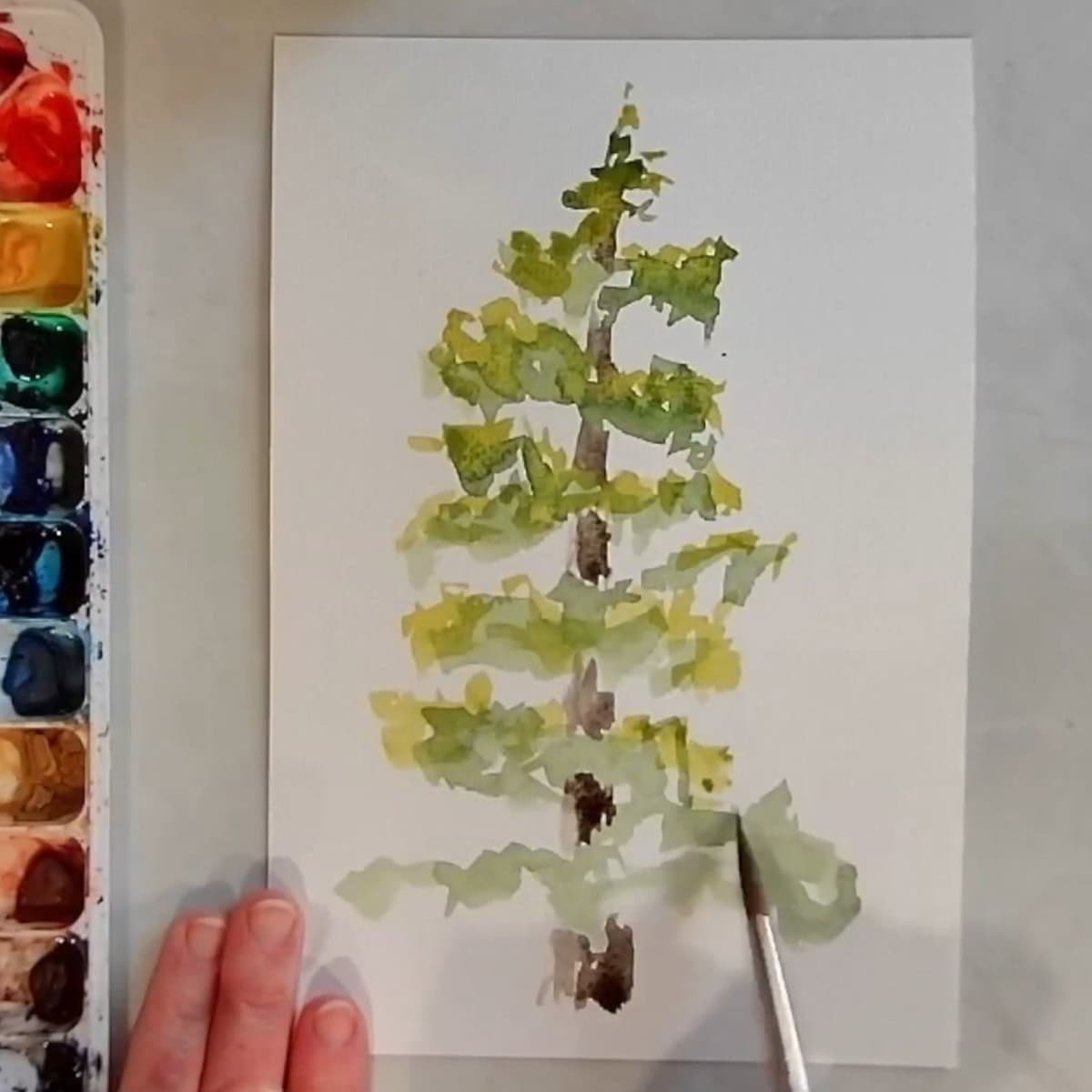
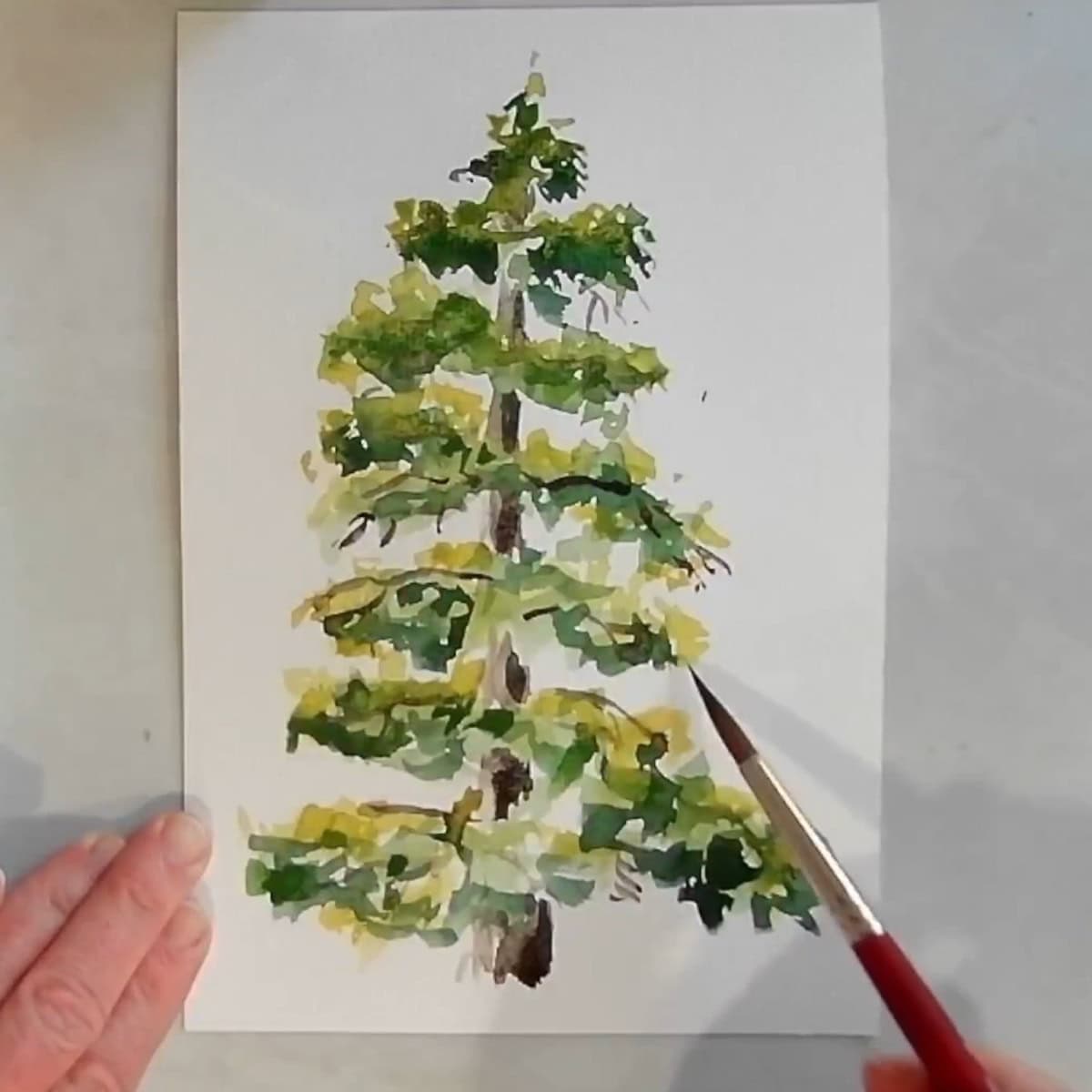
    An artist painting light green highlights on an evergreen tree.
    Paint light green highlights
    A watercolor painting of a pine tree next to a paint palette.
    Add dark green shadows
    • Combine a small amount of Prussian blue with cadmium yellow to make a very light green. Use this to paint in some highlights, concentrating mostly on the top part of the branches.
    • Then mix a little cadmium yellow, Prussian blue, and black paint to make dark green. Paint in some shadows, concentrating mostly on the underside of branches.
    An artist painting branches and twigs on a pine tree.
    Paint shadow on one side of trunk and a few branches
    An artist painting green middletones on a watercolor pine tree.
    Add another layer of light and middle green
    • Add a black shadow on the right side of the trunk. Slightly blend it into the brown already on the trunk.
    • Slightly water down some of the brown-black paint mixture and use it to paint in a few branches and twigs. Do not paint in every single branch, just a few hints of them here and there.
    • If you like, leave your tree like this. To add more texture, value and contrast you can add another round light, middle and dark paint.
    • Use the light green to add a few more overlapping highlights.
    • Add some more middle green in several areas around the tree.
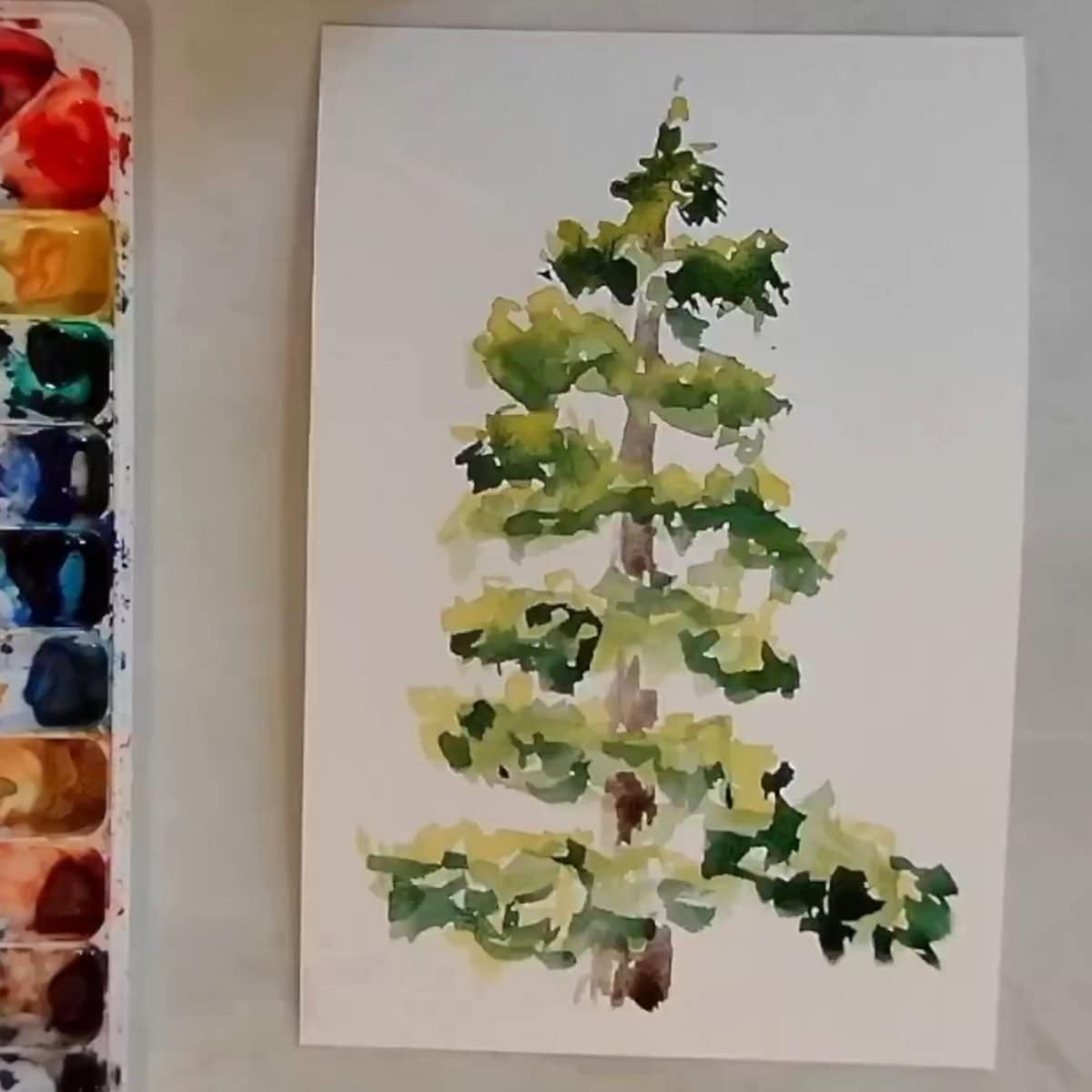
    An artist painting dark green shadows on a watercolor pine tree.
    Paint some large dark green shadows
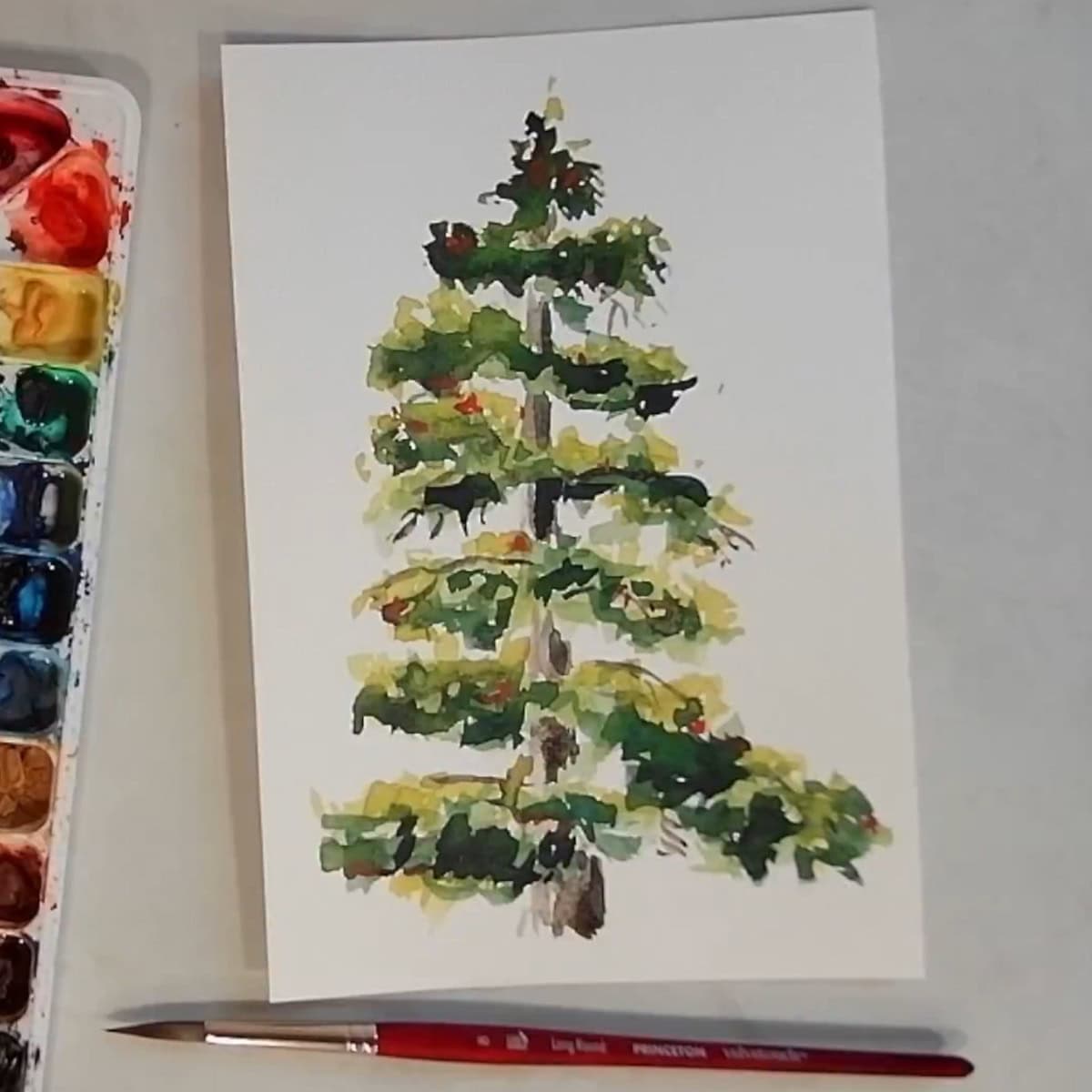
    Completed watercolor painting of a pine tree.
    Add a few dabs of red
    • Paint in some shadows around the branches, concentrating on larger dark areas.
    • Lastly, a few small dabs of red paint in a few areas. When we see objects, such as trees, they are composed of many different colors, all working together. Try squinting the next time you look at a tree. Identify how many different colors you can see.

    Variations

    • Paint a group of several evergreen trees together.
    • Paint a background of your choice around and behind the tree.
    • Paint a pine tree using nontraditional colors such as purple, red, or orange.
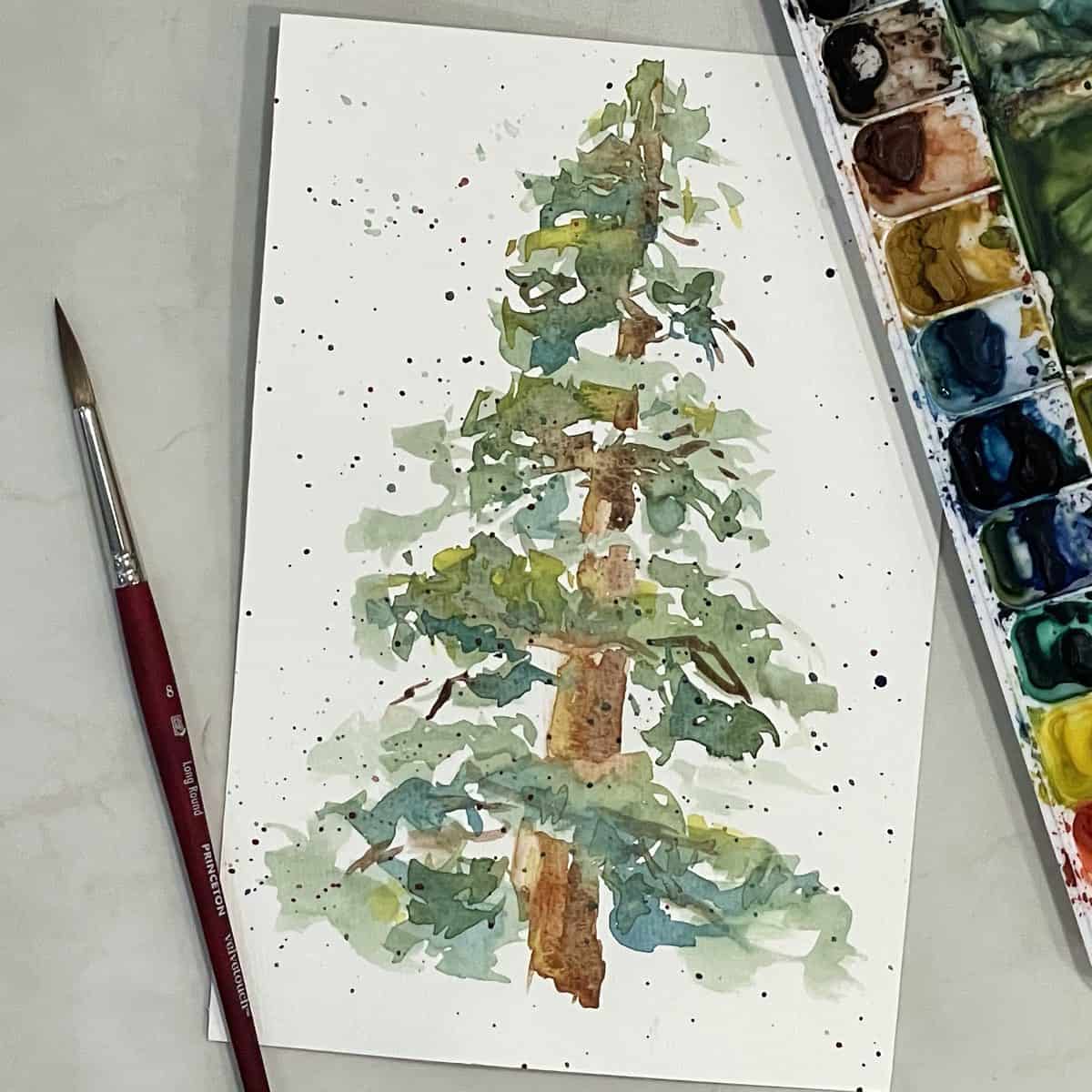
    • Load up some paint onto a stiff brush and splatter it over the tree painting for some extra fun.
    • This is a great watercolor painting that you could add to a greeting card, or gift tag, or pop into a frame to display around the house.
    A watercolor painting of a pine tree with splattered paint on the painting, next to paintbrushes, a cup of water, and a paint palette.

    Tips and tricks

    • Keep the paint strokes loose and irregular.
    • Avoid painting the branches in a pattern.
    • The paint will dry lighter than when it is wet.
    • Trees are usually not perfect triangles in nature. They are often lopsided and with more branches in some areas and twigs sticking out here and there. Let your painting reflect the irregularities.
    • When we see objects, they are composed of many different colors, coming together to give the impression of a solid object. Try squinting the next time you see a tree. How many different colors can you identify?

    Painting a Pine Tree Instruction Card

    A watercolor painting of a pine tree next to paintbrushes, a cup of water, and a paint palette.

    How to Paint a Pine Tree Easy in Watercolor

    Learn how to paint a pine tree easy in watercolor with this art lesson. Discover the simplest technique to paint a beautiful evergreen tree quickly. Keep the paint strokes loose and irregular when practicing painting this tree.
    Facebook Pinterest Email Print

    Equipment

    • Watercolor paper - I am using Strathmore 400 Series, cold press, watercolor paper, 140 lb., cut down to 9 by 6 inches
    • Watercolor paint - tube watercolor paint on a pallet or a box kit of watercolor paints. You can use whatever colors that you have on hand. For this lesson I use: Cadmium Yellow,
    • Prussian Blue, Black, Burnt Umber, and Cadmium Red Light
    • Paint brushes - I am using a #8 round brush.
    • Water
    • Paper towels

    Instructions

    • Mix cadmium yellow, Prussian blue, and a little bit of black paint. Paint the basic structure of the pine tree. Paint with me, look at a real tree, or a photo of a tree to get a sense of where the lights and darks are.
    • Use black and burnt umber to create the trunk. Paint the right side of the trunk in between the branch clusters. Rinse out the brush and then drag the paint from the right across to the left side of the trunk to create a highlighted effect.
    • Combine a small amount of Prussian blue with cadmium yellow to make a very light green. Use this to paint in some highlights, concentrating mostly on the top part of the branches.
    • Then mix a little cadmium yellow, Prussian blue, and black paint to make dark green. Paint in some shadows, concentrating mostly on the underside of branches.
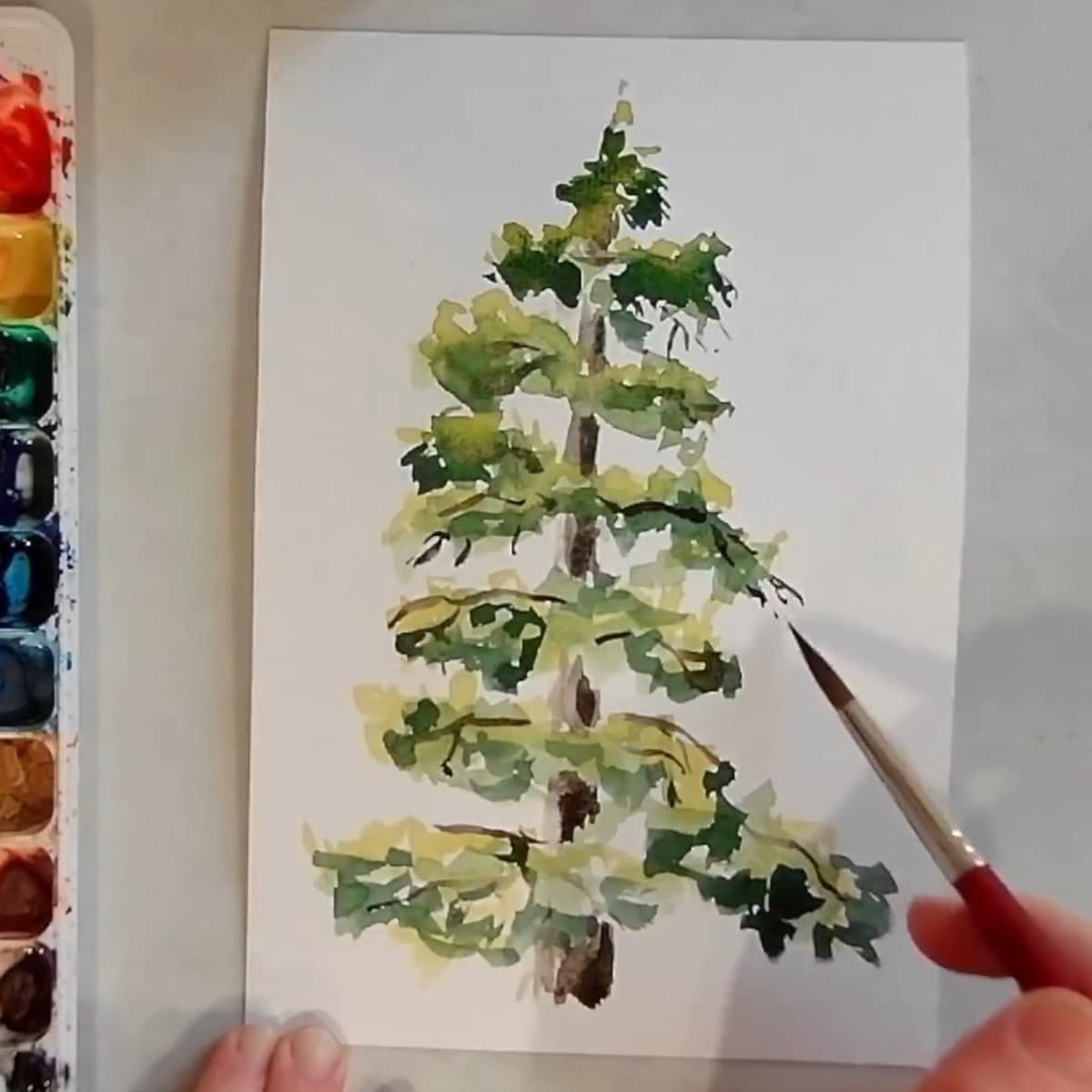
    • Add a black shadow on the right side of the trunk. Slightly blend it into the brown already on the trunk.
    • Slightly water down some of the brown-black paint mixture and use it to paint in a few branches and twigs. Do not paint in every single branch, just a few hints of them here and there.
    • If you like, leave your tree like this. To add more texture, value and contrast you can add another round light, middle and dark paint.
    • Use the light green to add a few more overlapping highlights.
    • Add some more middle green in several areas around the tree.
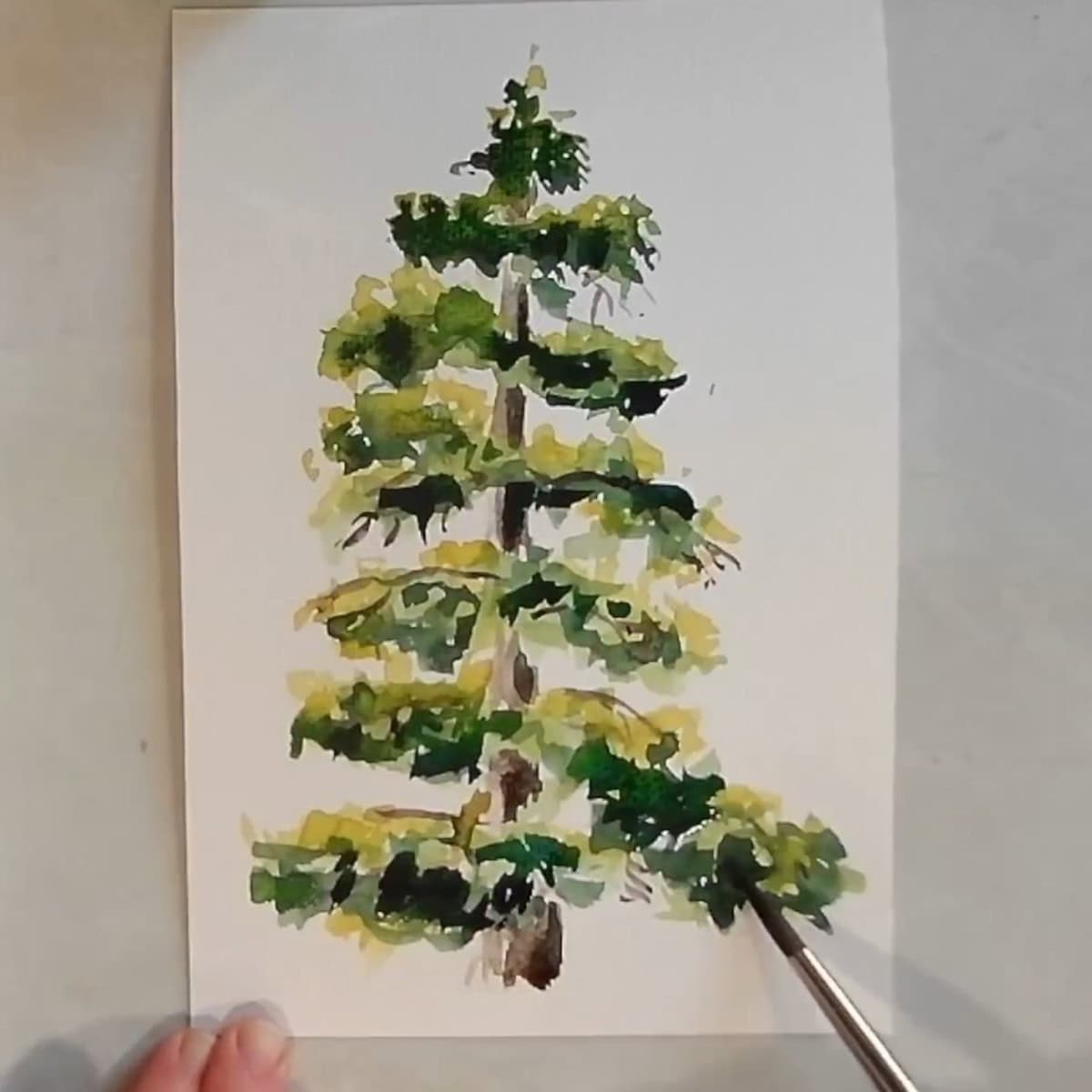
    • Paint in some shadows around the branches, concentrating on larger dark areas.
    • Lastly, a few small dabs of red paint in a few areas. When we see objects, such as trees, they are composed of many different colors, all working together. Try squinting the next time you look at a tree. Identify how many different colors you can see.

    Notes

    • Keep the paint strokes loose and irregular.
    • Avoid painting the branches in a pattern.
    • The paint will dry lighter than when it is wet.
    • Trees are usually not perfect triangles in nature. They are often lopsided and with more branches in some areas and twigs sticking out here and there. Let your painting reflect the irregularities.
    • When we see objects, they are composed of many different colors, coming together to give the impression of a solid object. Try squinting the next time you see a tree. How many different colors can you identify?

    Frequently Asked Questions

    What’s the easiest way to paint a pine tree?

    The easiest way to paint a pine tree in watercolor is to loosely paint the structure of the tree, add the trunk, and then build up thin layers of color and texture to fill in the branches.

    What brush do you use to paint a pine tree?

    There are many different techniques for painting trees using many different types of brushes. Some people like fan brushes, flat brushes, or filberts. In this tree lesson I use a number 8 round brush for all of the strokes. I recommend trying out a few different brushes and seeing what you like the most.

    Do you paint lights or darks first when painting a pine tree?

    When painting with watercolor paint it is usually best to start with the lights and then move to the darks. In this pine tree painting tutorial, the basic tree structure is added with middle tones, and then the light-to-dark method is used.
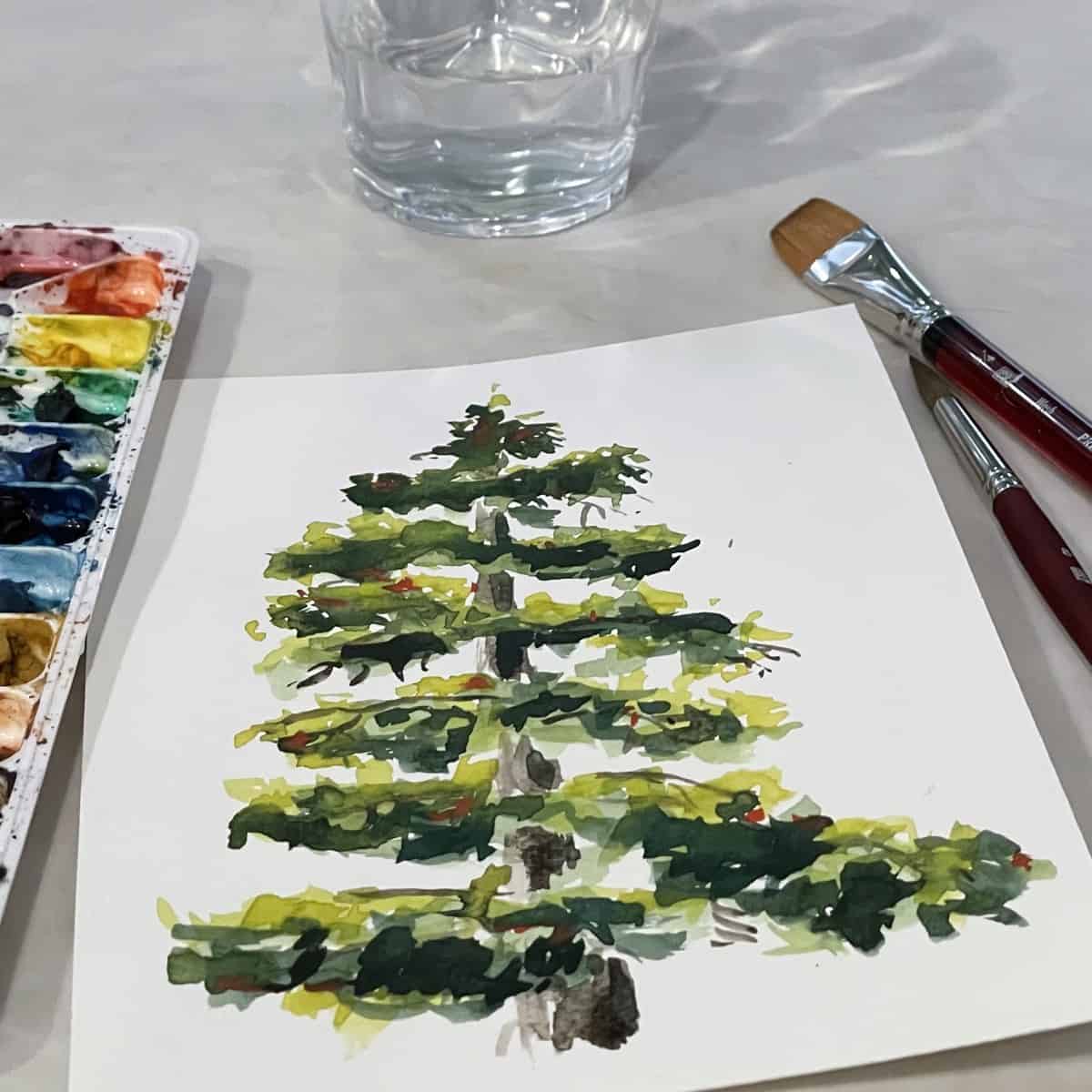
    A watercolor painting of a pine tree next to paintbrushes, a cup of water, and a paint palette.

    You also might like

    • How to Paint Trees Reflected on Water
    • Paint a Watercolor Mountain Landscape Easy
    • Learn Easy Watercolor Techniques for Beginners

    Please leave your questions, comments, and ratings below!
    More Simple Watercolor painting for beginners

    • Tubes of watercolorpaint in front of a paint palette with a paintbrush.
      How to use Watercolor Paint Tubes for Beginners
    • A watercolor painting of a Christmas tree next to a paintbrush and palette.
      How to Paint a Simple Christmas Tree Step by Step
    • Watercolor painting of pansies that show examples of watercolor painting techniques for beginners next to a palette and paintbrush.
      Easy Watercolor Techniques for Beginners 
    • A watercolor painting of three colorful fall leaves next to a paintbrush, paint palette, and leaves.
      Paint Colorful Autumn Leaves (Easy Watercolor Tutorial)

    Leave a Reply Cancel reply

    Your email address will not be published. Required fields are marked *

    • Facebook
    • Instagram
    • Mail
    • YouTube
    • Pinterest

    Most Popular Online Art Classes

    • Drawing paper, sketchpads, drawing pencils and eraser
      Best Types of Paper for Drawing, Sketching and Other Art
    • Pencil drawing of fall leaves on a sketch pad next to watercolored paintings of fall leaves with drawing pencils and eraser.
      Draw Easy Fall Leaves Step-by-step (Realistic Autumn Leaf Sketch)
    • spheres created in pencil, watercolor paint and soft pastels with paints, paint brushes and drawing pencils
      How to Draw a Sphere in 3d
    • Drawing of a coffee mug in pencil with colored pencil drawings in the background.
      How to Draw a Coffee Mug (Cup Sketch) Beginning Drawings

    Best Spring Art Projects

    • Painting of a watercolor lake scene with trees, a hill and reflections on the water next to paint brushes and a watercolor palette.
      Paint an Easy Watercolor Lake Scene Step-by-step
    • A pencil drawing of an eye on a sketchbook with drawing pencils next to colored pencil drawing of eyes.
      How to Sketch a Simple Eye Step-by-step Drawing Tutorial
    • Drawing and watercolor painting of oak trees with drawing pencils and paint set.
      Sketch an Easy Oak Tree Pencil Drawing
    • Watercolor painting of pansies that show examples of watercolor painting techniques for beginners next to a palette and paintbrush.
      Easy Watercolor Techniques for Beginners 
    Sam - Art Instructor

    Hi, I'm Sam! Creating is a journey. While learning basic skills is important, the process of making is much more important than the finished project. Experiencing hands on drawing, painting and other art activities is fulfilling and enlightening.

    More about me →

    Footer

    ↑ back to top

    Copyright © 2025 ARTLOOKLEARN.COM